Blog Post
How do You Measure a Screw?
How do You Measure a Screw?
Trying to replace a missing screw can be surprisingly frustrating. You have the screw in hand, but measuring it incorrectly can lead to ordering the wrong size, wasting time, and creating unnecessary delays. In this guide, we’ll walk you through the correct way to measure screws, explain the most common measurement mistakes, and help you understand the key dimensions that actually matter. By the end, you’ll know exactly how to measure screw length, diameter, and thread pitch so you can confidently find an exact replacement without guesswork.
How to Measure Screw Length Correctly
By far, the most commonly searched screw dimension is screw length. While it isn’t more important than diameter or thread pitch, it is the measurement people look up most often when trying to find a replacement.
Fortunately, measuring screw length is straightforward, as long as you remember one critical rule.
The General Rule (Most Screws)
For the majority of screws, do not include the head when measuring length. Measure only from the underside of the head down to the tip of the screw.
Including the head is a very common mistake and can easily throw your measurement off by 2 to 5 mm, which is enough to make a replacement screw too long and unusable.
The Important Exception: Flat-Head Screws
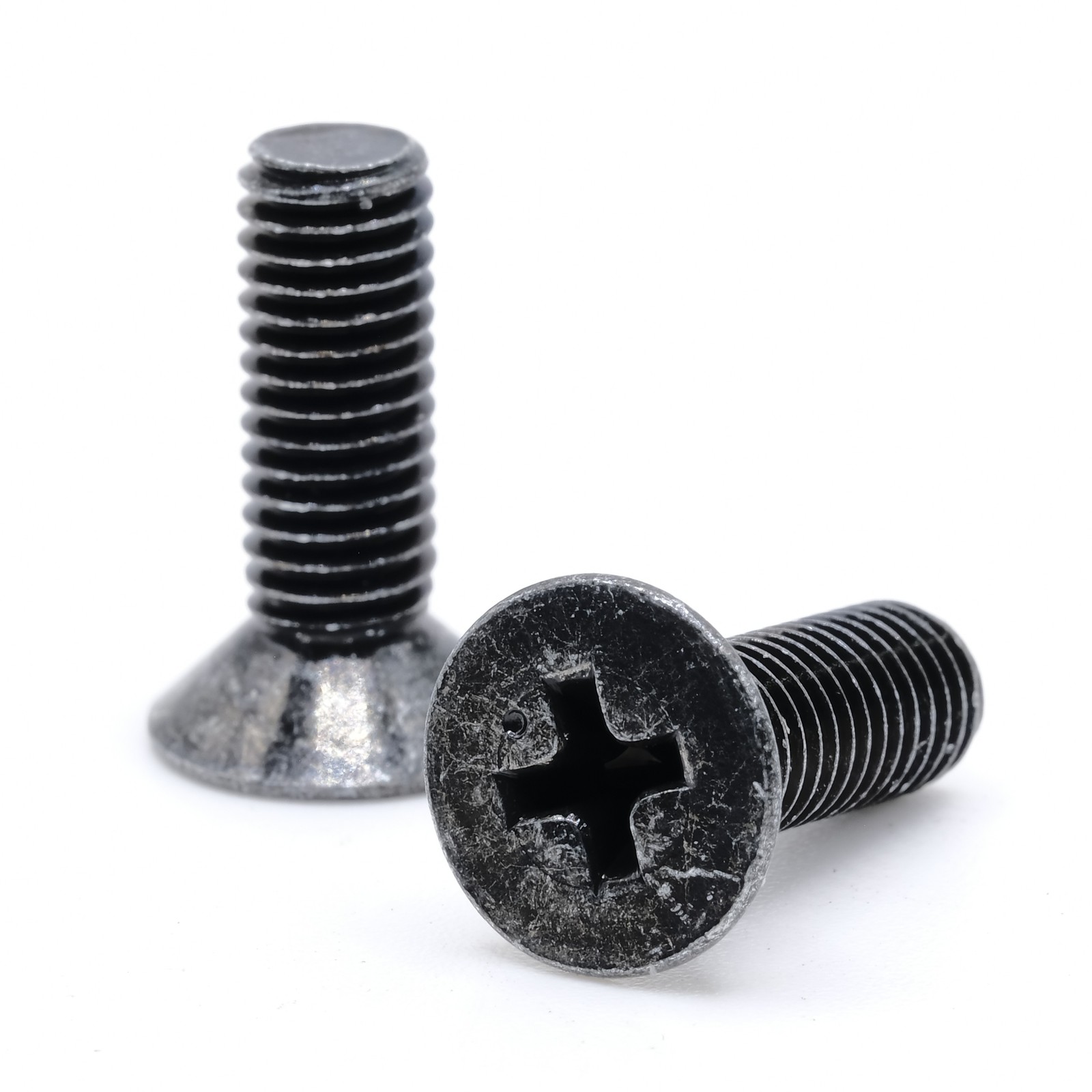
A Flat Headed Screw.
Flat-head (countersunk) screws are measured including the head. This is because a flat-head screw is designed to sit flush with the surface when installed, meaning the entire screw, including the head, sits below the surface of the material.
Keep this distinction in mind, and you’ll correctly measure screw length in nearly every situation you encounter.
Understanding Screw Threads: Diameter and Pitch
The threads of a screw involve several different measurements. Below, we’ll focus on the most common and important ones so you can correctly identify and replace your screw.
Thread Diameter (Screw Size)
The first thread measurement to understand is the thread diameter, which is the diameter of the screw itself. This measurement is expressed using standardized sizing systems.
For metric screws, sizes are labeled as M4, M5, M6, and so on. The “M” stands for metric, and the number represents the diameter of the screw in millimeters. For example, an M5 screw has a 5 mm diameter.
At ReplacementScrews, we primarily work with metric fasteners, so this guide focuses on metric measurements rather than imperial sizing.
To measure the thread diameter, use calipers or a ruler to measure straight across the shank of the screw, perpendicular to its length. Once you have this measurement, you can easily determine whether the screw is an M4, M5, M6, and so on.
Thread Pitch
The next critical measurement is thread pitch. Pitch is the distance between one thread ridge and the next. A pitch of 1.0 mm means there is 1 mm of distance between each thread.
Most screws use standard thread pitches, so you will rarely encounter anything outside of these common sizes:
M4: 0.7 mm pitch
M5: 0.8 mm pitch
M6: 1.0 mm pitch
M8: 1.25 mm pitch
Measuring Thread Pitch Without a Gauge
If you don’t have a thread gauge, you can still estimate the pitch accurately. Measure the total length of the threaded section, then divide that number by the number of thread ridges. The result will give you a close approximation of the thread pitch.
With both the diameter and pitch identified, you now have the key thread information needed to confidently match your replacement screw. Search our collection of screws sold by the size to find a match!